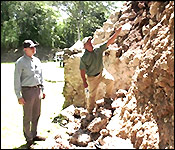
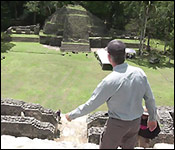
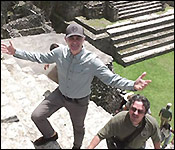
 The US Government is making its biggest investment in cultural preservation yet, with the Caracol Archaeological Reserve receiving the U.S. Ambassador's Fund for Cultural Preservation investment in conservation.
With scores of daily visitors and a new highway providing access, officials say the investment comes at a critical time for protecting one of Belize's and the region's most significant archaeological sites. Jaleeza Roberts reports:
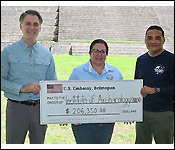
In a significant move to protect Belize's cultural legacy, the U.S. Government has awarded over $200,000 USD to the Caracol Archaeological Reserve. The grant-the largest given in Belize by the U.S. Ambassador's Fund for Cultural Preservation-will support critical restoration and conservation efforts.
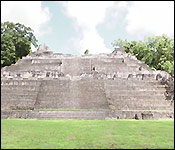
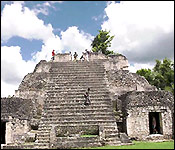
It will fund the Archaeological Stabilization, Conservation and Community Engagement Project, targeting urgent conservation work at the Caana Complex and Plaza B ballcourt, while also supporting training, digital documentation, and community participation.
Minister of Culture Francis Fonseca says the need is very real:
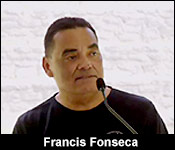 Francis Fonseca, Minister of Culture
"Today I want us to also think about Caracol as a living part of Belize's heritage. Protecting Caracol means defending knowledge, creating opportunities, building skills, and strengthening the connection between Belizeans and the heritage that surrounds us. The need for conservation is very real. Caana, the magnificent sky place, rises approximately 43 meters, remaining the tallest human-made structure in Belize. Decades of exposure to heavy rainfall followed by prolonged dry conditions have contributed to the deterioration of plaster surfaces, water penetration, weakened masonry, and structural instability. With the guidance of Drs. Arlen and Diana Chase of the University of Houston, who have worked at Caracol for more than 40 years, the Institute of Archaeology will undertake the important work of stabilizing and conserving vulnerable areas of Caana and addressing other structural concerns."
Director of the Institute of Archaeology, Dr. Melissa Badillo, expressed that the grant allows specific vulnerable areas to be addressed before deterioration becomes more pronounced:
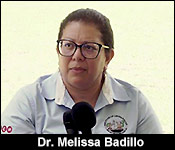 Dr. Melissa Badillo, Director, Institute of Archaeology
"So we annually, routinely monitor all archaeological sites, and so this was one of those that was prioritized within the last two years because today is the culmination of that application process and documentation. We already have ideas for future projects. So this work never ends. Conservation is absolutely needed on a regular basis. And so, you know, once we get into this one, we start looking at the other one. For right now, in the last two years or so, this was definitely one of our priorities."
"I think for us right now is really to get that message out about preservation and the impacts that we have as humans on these types of structures and these spaces. And having that education and outreach part be an essential component of a project like this will certainly help us to get the message across. And we not only want to share that with Belizeans, but with visitors to the site as well, you know, that they respect these spaces and that when they do come, we have, you know, a visit where we don't threaten these sites any more than we need to."
Caana, which rises approximately 43 meters and remains the tallest human-made structure in Belize, is a priority. The timing is particularly important as visitation to Caracol grows from the enhanced highway. The Institute of Archaeology says approximately 25,000 people visited the reserve in 2025. For Ambassador Bauer, he believes this grant can help showcase history:
 Andre Bauer, US Ambassador to Belize
"To me, it is essential for what makes Belize Belize to preserve these sites, and so I'm so thankful that it was prioritized by both governments. Not only America, but they came to... Belize came to the table with almost the exact same amount that the U.S. government did, and so together this is a collaboration of what we think is important, and it furthers our friendship. It shows really how closely we're aligned. In my home state, again, I said that tourism is number one, only right in front of agriculture. And so very, very big similarities I see. And so I'm glad that both my state and this country prioritize what really showcases history."
But Caracol is located about 5 miles from the Guatemalan border, and with tensions increasing, safety is a major factor.
Francis Fonseca, Minister of Culture
 "I think we have had in place for a very long time a very good security structure to ensure that those who come across the border are not doing too much damage to the site. Some of that is happening, and we always have to be very concerned about that. The wider Chiquibul, as you will appreciate, is a massive, massive area of land and that's much more difficult for us to manage, much more difficult for us to really control and patrol effectively. So we're always looking for better ways of security management of the area. In the Chiquibul, as you know, we've had a long history of people coming in, cutting down the trees, gold panning, and a lot of incursions into our territory. So it's an ongoing challenge, but we work collaboratively-as I said, BDF, police, FCD, Institute of Archaeology, NICH-we all work together to do our best to try to protect and preserve this area."
And because it was his first visit to Caracol, we had to ask the Ambassador's opinion:
Andre Bauer, US Ambassador to Belize
"I see why it's such a jewel and a gem now. I can't wait to get to walk to the top and see the views. But it really... it's hard to put in words how spectacular this is."
"This is clearly a jewel. When you talk about the jewel, this is a jewel, and I am so excited to get to be here today."
Jaleeza Roberts, 7News.
|