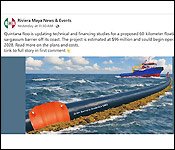
 Mexican media outlets are reporting that Quintana Roo is looking at a proposed 60-kilometer floating sargassum barrier off its coast to deal with its sargassum problem. The project is estimated to cost $96 million and could begin operating in 2028.
So is this a solution that could work for Belize? Well, biodiversity scientist Valentine Rosado says it's not that simple:
 Valentine Rosado, Biodiversity Scientist
"There's a lot of work happening in the Mexican side with the response to sargassum. I'm familiar with a lot of different communities that actually attended the conference where everyone that's working on sargassum was there sharing the work that they're doing. And I think what's most important for us is that here we are trying to identify one big solution-so when we see one big story being shared, we want to, like, to kind of lean on that and think if we just do that one thing here in Belize, then that's going to help us with the sargassum. But it's a multitude and different layers of things that are there that we're implementing in terms of response. But the most important thing is that there, they have worked on the communities dealing with the people that work on the beach: they have rakes, they have tractors, they have equipment that address the sargassum that is on the beach. In addition to that, the military of Mexico-they have these offshore booms that tend to corral sargassum into sacrificial areas, and then they have the boats that are similar to the Hol Chan harvesters that they come and they collect this sargassum that's nearshore, basically between the barrier reef and the beach. And it helps to reduce the sargassum that comes to the beach, but it doesn't mean you don't have workers or vehicles on the beach. You have all of these things working together to minimize the amount of sargassum and to try to get that sargassum off into areas where people use it to process different products. What Mexico has been doing in the past years is, in addition to this, is that there is a third layer."
"They have the capability, the means, the entire military that have these big ships that go way offshore for miles, days at a time, and they collect tons and tons of sargassum. So it's not that one thing they're doing to minimize the sargassum, but all of these things combined working together helps to reduce the quantity of sargassum that washes up on the beach. All of them need to be functioning together-and fortunately, Mexico, because they're leaning on the military arm, they have the resources, and they're financing these activities that really help to deal with the sargassum situation."
|