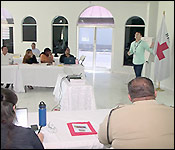
 After hurricanes or droughts or wildfires, you'll likely see members of the Belize Red Cross providing assistance across the country. But now, they're embarking on a project that will allow them to receive financing to get ahead of these disasters. Anticipatory Action refers to a strategy to help save lives and mitigate the impact of extreme events. Today, a conference was held to inform stakeholders about what the strategy can look like.
Shivanie Mahase, Research Assistant, IFRC
 "Belize and Barbados, those two have been identified as the two pilot countries for many different reasons but we more or less applied and assessment and a criteria and those two were selected as pilot countries for the English and Dutch speaking Caribbean."
"The early action protocol really aims for us to have plans in place so that when we get a forecast, we have set out actions to do between the forecast and the time of impact."
"That is all part and parcel of the Red Cross/Red Crescent's commitment to not only respond post disaster but to act ahead of time and pre-disaster. So the protocol in itself would allow the Belize Red Cross to accept anticipatory action funding from our draft mechanism which is the disaster response emergency fund so they will more or less say what they plan to do before the disaster and they will more or less get funds to carry out those actions."
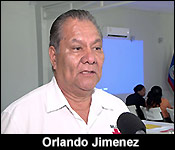 Orlando Jimenez, Project Manager, DRR & Climate Change, BRC
"Today we convened the stakeholders because we want to share information and also get information from them for us to be able to develop what we call and early action protocol. An early action protocol is a document that is going to tell us what to do to be ready in the event of a disaster. As you know before, we used to prepare to respond to disasters but with this anticipatory actions, we want to help people prepare in any event. In this way we'll be able to save not only their lives but their assets so they can bounce back much easier. If we wait to respond to a disaster, it's harder for anybody to bounce back."
"There are two types of protocols that we want to develop, one is the full early action protocol which can be up to 500,000 CHF dollars and we have the simplified protocol which could be like 200,000 CHF dollars. And we want to come up with this document not at the end of this session but we will have two or three more visits from the federation for us to come up with a comprehensive plan."



 Email
Email Print
Print